The Science of Hadith and Its Historical Stages

المؤلفون

  • Pro, Dr. Mohammad Ismail Labib Balkhi Labib Balkhi Salam University image/svg+xml نویسنده

DOI:

https://doi.org/10.64104/v1.n1.2011

الكلمات المفتاحية:

Science of Hadith، Science of Narration، Science of Understanding (Dirayah)، Chain of Transmission (Isnad)، Text (Matn)

الملخص

This article examines the science of Hadith, its definitions, and its historical stages. The science of Hadith is divided into two branches:

1.      Ilm al-Riwayah (Science of Hadith Narration): This branch encompasses the sayings, actions, approvals, and attributes of the Prophet ﷺ, as well as those of the Companions and the Successors. Its purpose is the preservation, documentation, and verification of the authenticity of Hadiths.

2.      Ilm al-Dirayah (Science of Hadith Understanding/Analysis): This branch involves the study of the rules and conditions of the chain of transmission (Isnad) and the text (Matn) in order to distinguish authentic Hadiths from inauthentic ones.

Benefits of the Science of Hadith: It prevents the distortion of religion, avoids carelessness in narration, purifies superstitions, and nurtures sound, rational thinking.

Historical Stages of the Science of Hadith:

  • Emergence and Early Period: During the era of the Companions, Hadiths were preserved with sincerity, and the recording of some manuscripts (Sahifah) began.
  • Development: From the 2nd century to the beginning of the 3rd century AH, Hadiths were compiled, collected, and scrutinized; scholars began critiquing narrators (Jarh wa Ta’dil).
  • Compilation of Hadith: From the 3rd century to the mid-4th century AH, independent Hadith books were authored, such as Sahih al-Bukhari and Sahih Muslim.
  • Proliferation of Writings: From the mid-4th century to the early 7th century AH, scholars gathered, systematized, and published reference works.
  • Maturity and Perfection: From the 7th to the 10th century AH, Hadith sciences reached their peak, and major works were written by renowned scholars such as Ibn al-Salah and Imam Nawawi.
  • Stagnation: From the 10th to the 14th century AH, innovation and research declined, with a tendency toward abridgments and simpler texts.
  • Revival and Activity: From the 14th century AH to the present, scholars responded to distortions and doubts, authoring and publishing treatises, critical works, and commentaries on Hadith.

Conclusion: From the time of the Prophet ﷺ until today, Islamic scholars have diligently preserved, critiqued, explained, and expanded Hadith literature, keeping the method of distinguishing authentic from weak Hadiths accessible to the entire Muslim community.

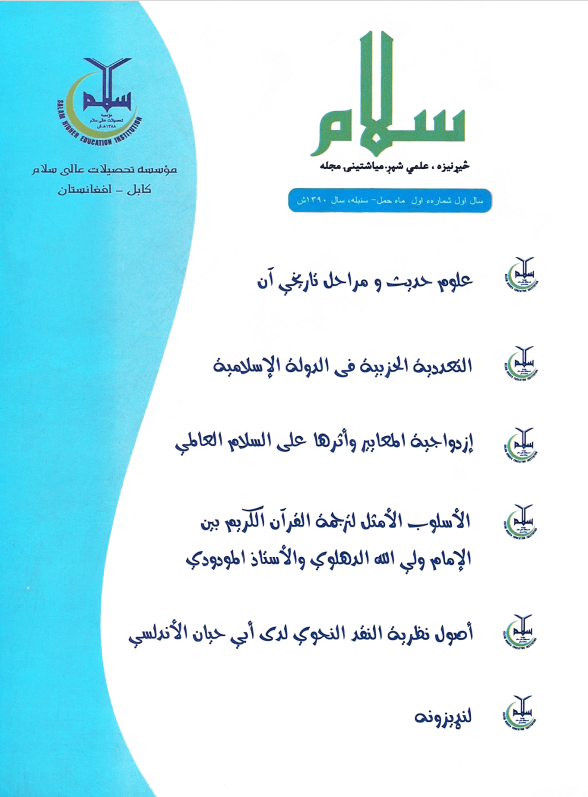
Salam Journal image

التنزيلات

منشور

2011-03-09

كيفية الاقتباس

The Science of Hadith and Its Historical Stages . (2011). مجله علمی بین المللی سلام, 1(1), 7-21. https://doi.org/10.64104/v1.n1.2011